
Meg Maker analyses how our sphere as wine writers has changed over recent years, and what – if any – opportunities remain for writers to make an income in the future.
As an active writer and chair of the Circle, I’m in routine contact with a diverse crowd of journalists, critics, and commentators about wine and spirits. I cannot recall any recent conversation in which my correspondent has reported making more money today than they did ten years ago. And not even the same money—less. And not just less but far less.
The media landscape has shifted tectonically over that period. There used to be more lifestyle titles, hence more opportunities to land wine and spirits bylines. There were also, I’d hazard to guess, fewer people overall specializing in wine writing. The paydays were generally acceptable, and those who had regular columns in national and regional outlets could count on a steady income stream. Ditto those of us in a good relationship with an editor who’d routinely offer assignments. Wine writing wasn’t necessarily the entirety of our earnings, but it wasn’t nothing, and the chance to ply our trade for coin made it all worthwhile.
Today, many of those outlets have shuttered, shifted focus, or been subsumed into media conglomerates. Editors have moved on; we have lost our champions. The rise of podcasts and videos makes different demands of writers, and while some have made the leap, others of us cling to a belief in the written word. And it seems the field of creatives is more crowded than it was ten years ago, as wine and spirits as a lifestyle topic has drawn young talent (a good thing) to the shrinking pool of work (a bad thing).
The upshot is there are fewer opportunities for experienced writers to reach swaths of readers nowadays. Many of us find ourselves in a bind. We are mid to late career, highly wine knowledgeable, our passports inked by travel, our notebooks piling up, yet we labor to land assignments in the dwindling pool of opportunity, and we’re working for less pay, to boot.
It’s no wonder so many of us have turned to self-publishing on platforms like Substack. These sites make it easy for a writer to spin up a self-published newsletter, charging readers subscription fees payable on a monthly or annual basis. The writer has complete control over the content, drumbeat, and tone of their publication, and the subscriptions offer a measure of assurance about income stream.
I’ve been publishing on Substack for about eighteen months, having migrated from a self-hosted WordPress site where my content was free. In that short time I’ve witnessed a wave of other wine experts join the platform. They’ve carried their existing audiences onto the platform, and swiftly earned new subscribers, too. It’s been startling to witness wine columnists with national reach here in the States—Lettie Teague, Dave McIntyre, Paul Gregutt, and others—lose or leave their regular gigs and break into this form of self-publishing.
For a while we wine writers on Substack were hard to find. Most of us set our primary category to Food & Drink, a section dominated by food writers, recipe developers, cookbook authors, and food critics. Their numbers dwarfed those of the comparatively smaller pool of wine writers, which made it difficult for readers to discover us, and hard for us to break out in Substack’s lists of Best Sellers and Rising authors.
Last month, one of Substack’s team members, himself a wine lover, reached out to a couple dozen of us to see if we’d like to populate a new Wine & Spirits subcategory. Our response was swift and enthusiastic, and in short order the new category went live. It’s now far easier for readers to find wine experts, and the leaderboards have generated excitement among us newsletter publishers.
Notably, Substack only includes on leaderboards those contributors who offer paid tiers. Some wine writers who write only for free complained about that choice, but it’s based on the platform’s business model, which collects 10% of all subscription revenues. For example, when a reader pays me $80 for an annual subscription, I pay the platform $8 (and also pay an ecommerce transaction fee).
In other words, Substack doesn’t make money unless I do. That means it does everything in its power to help us publishers acquire paying subscribers. It also means that everyone who uses the platform gratis, both readers and those who offer only free newsletters, is subsidized by the people who do charge fees.
I’m okay with that. Although to date my subscription income has marginally offset my electric bill, and I’m not ready to retire on my earnings, the money isn’t nothing. Just as with my earlier freelance writing, it offers a chance to do what I love and earn compensation in the process.
On the other hand, let’s take this Substack example to the logical extreme. What if, say, every Circle member joined Substack and charged the equivalent of $80 per year for a subscription? There are over 270 of us now. Subscribing to even half of us would cost a reader $10K per year.
That’s not happening (I did call it a logical extreme). But you can see the issue with every one of us fleeing to Substack. It puts expert wine and spirits writers in direct competition with one another for readers’ attention.
Creatively that means it’s more critical than ever before to develop a unique voice, a beat, and a writerly personality. To connect with readers and make them want to read every word you write, just the way you write it. To make sure your readers need to read the story only you can tell.
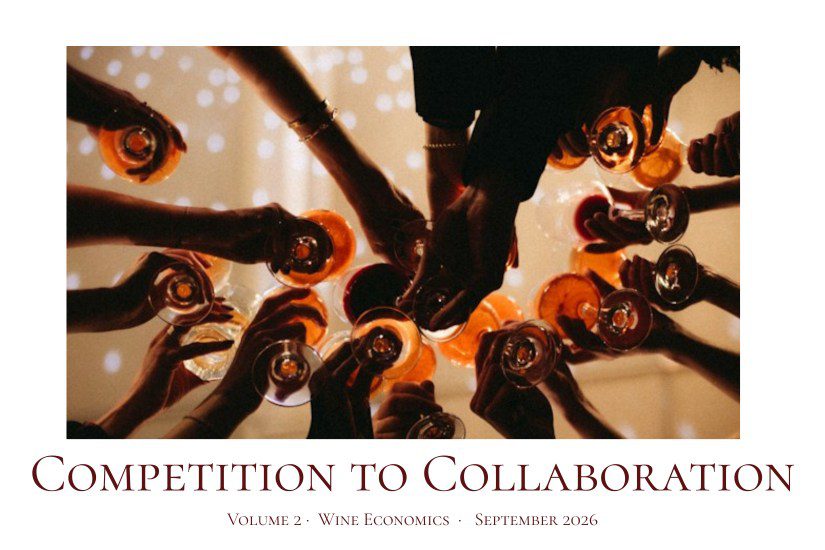
But also, what if we thought of it not as competition but collaboration? The platform offers us many ways to support each other. We can subscribe to each other’s newsletters; free is easy, but two writers can reciprocally subscribe to each other’s paid tier. It nets out to zero in each person’s pocket, but it is a way to amplify their work. We can also comment, like, and share to boost each other’s visibility. We can make a formal recommendation of another’s newsletter to our readers. And of course we’re writers, so we can use each other as sources for reported pieces, and interview each other to raise awareness of our respective specialties.
One might say that good wine writers have always been in competition with one another. But today the stakes make that competition seem even more poignant. We’re right to feel it, but we’d be wrong to let it tear us apart.
Photo by Klara Kulikova